
October 1, 2026 · The CosmicOracle Team
How to Use Oracle Cards: A Beginner's One-Card Guide
Learn how to use oracle cards with a simple single-card reading, a worked example, and journal prompts. Try a physical deck or CosmicOracle's free daily draw.
To use oracle cards, choose an open-ended question, shuffle your deck, draw one card, and reflect on its image and written meaning. Finish by writing one small action you can take. A single card is enough for a first reading.
You can approach this as a spiritual ritual or a quiet journaling exercise. Either way, the useful part is connecting a symbol with something you can honestly observe in your own life. A card does not establish what will happen or what someone else is thinking.
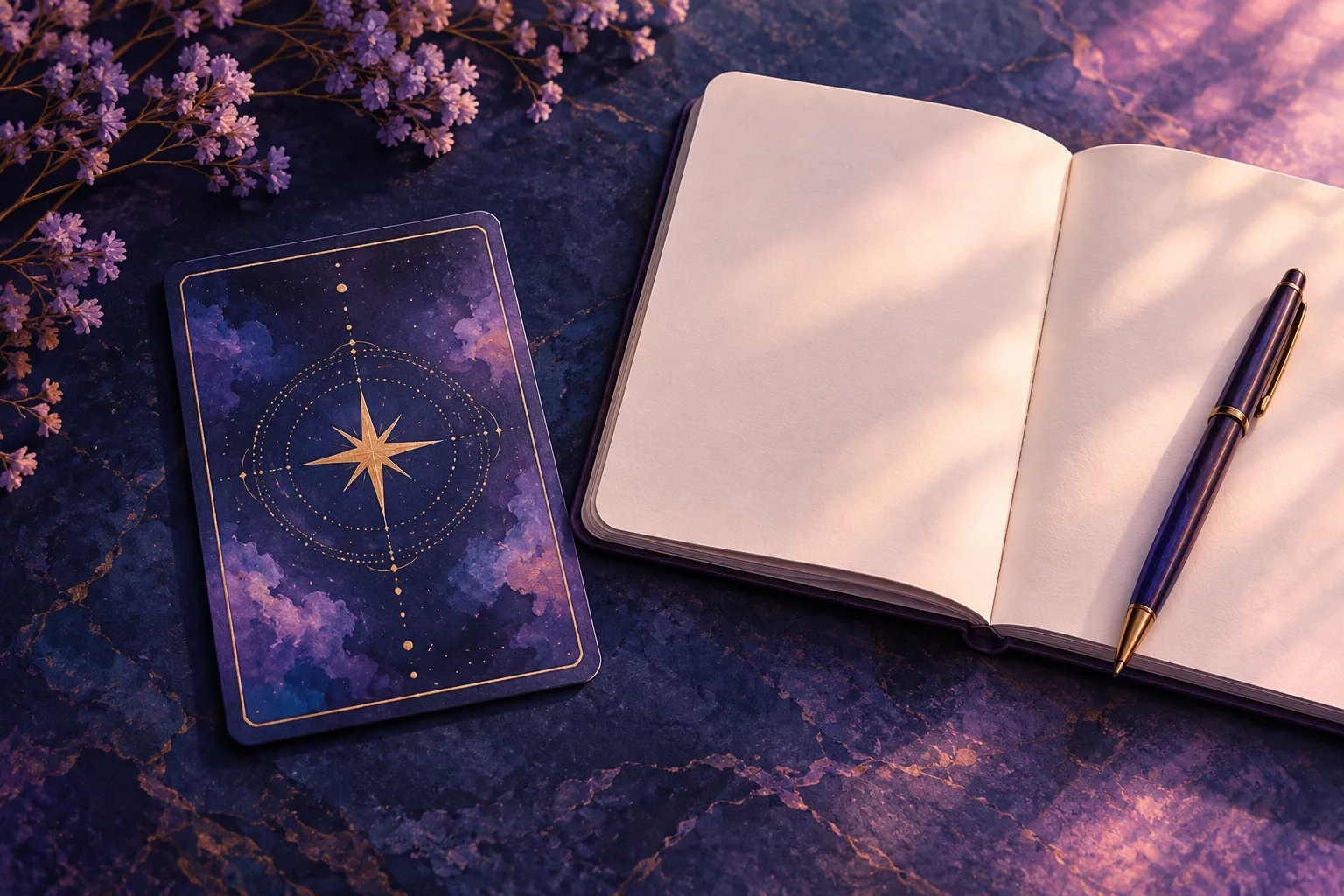
What you need for your first oracle card reading
Start with a deck, its guidebook if it has one, and somewhere to make a few notes. You do not need to memorise every card before you begin. Read the deck creator's introduction first, because the meanings and suggested methods belong to that particular deck.
If you are still choosing between card systems, our oracle cards vs tarot guide explains the differences. This practice starts with one oracle card so you can give its message your full attention.
No physical deck yet? You can use CosmicOracle's free daily oracle card and follow the reflection steps below. The online draw has its own controls, so skip the physical shuffling instructions.
How to use oracle cards, step by step
1. Pause and name the situation
Give yourself a few quiet minutes. Before touching the cards, write one sentence about what is actually happening: “I have several unfinished ideas and want to choose where to begin.”
This gives your reflection a clear starting point. It also helps you notice when an interpretation is drifting away from the question you meant to explore.
A special ceremony is optional. Deck creator Chinggay's Practical Magic beginner guide describes a question-led practice without requiring a ritual. You can keep your own preparation just as simple.
2. Ask a question that leaves room for reflection
Choose a question about your attention or actions. For a first draw, try: “What could help me approach this situation more thoughtfully?”
“Will my idea succeed?” asks a card to settle an uncertain future. “What can I give attention to as I begin?” gives you something to explore today. You can still hold a hope or worry in mind without treating the draw as a verdict.
Keep this first reading focused on one situation. You can explore broader questions once you are comfortable with the process.
3. Shuffle and draw one card
Shuffle gently in a way that suits the size of your deck. Decide on a simple selection method, such as taking the top card after shuffling or spreading the cards face down and choosing one.
For this exercise, stop after one card. There is no need to keep drawing until you find a message you prefer. If a card falls while you shuffle, you can put it back and continue. You do not have to treat an accidental drop as an instruction.
4. Notice the card before explaining it
Look at the image and title. Write down one detail you can see and one response it brings up.
For example, “There is a path through a garden” is an observation. “It makes me think about beginning slowly” is your response. Keeping those separate helps you recognise what comes from the artwork and what you are bringing to it.
You do not need an immediate insight. A plain description is a useful place to start.
5. Read the message and relate it to your question
Now read the guidebook entry or the card's written message. Use it to understand the creator's intended theme, then ask how that theme might relate to your situation.
Try completing: “In the context of my question, this could invite me to…”
Keep the interpretation specific enough to examine. A theme of patience might prompt you to allow time for learning. It does not prove that a delayed reply hides a particular intention. You can disagree with a message or find that it does not fit.
6. Choose one action and close the reading
Write one small action that remains sensible even without the card. If your reflection points towards focus, you might set aside ten minutes for one unfinished task.
Put the deck away and return to your day. Later, review whether the action helped. You are checking what you learned and did, rather than trying to make every event match the reading.
A worked example: from a card to a practical next step
The following example is invented to demonstrate the method. The card described here is fictional and is not part of the CosmicOracle deck.
Imagine you want to start a sketchbook but keep waiting until you have a complete project planned. Your question is: “What could help me begin drawing again?” You draw a fictional card called First Steps, showing a winding garden path. Its imagined message encourages taking a modest beginning seriously.
Your notes might look like this:
- Observation: “The path starts close by, and I cannot see its destination.”
- Interpretation: “I may be asking myself to know the whole project before making a first mark.”
- Action: “Tonight I will sketch one ordinary object for ten minutes.”
- Review: “Did I actually make time to draw? What made starting easier or harder?”
Another reader could connect the same image with learning or exploration. Your interpretation is a possibility to consider in your own context. The action is yours to choose.
To try this yourself, record your question, card title, one visible detail, one possible meaning, and one action. Leave a line for an evening review. That is a complete single-card journal entry.
Using CosmicOracle's free daily card
When you visit anonymously, the free oracle card page offers one daily draw from a 44-card deck. No account or birth details are needed to read the card's full written message.
- Open the page and choose one of the three face-down cards. These are choices for a single draw, rather than a three-card spread.
- Wait for the reveal, then look at the artwork and read the message.
- Apply the observation, interpretation, and action prompts above to your own question.
The message is fixed for that card and is the same for everyone who receives it. The anonymous draw does not use your birth chart. Returning in the same browser restores today's card when site storage is available. A new draw becomes available on the next local calendar day, rather than exactly 24 hours after your last draw.
Personalised Oracle Cards in the dashboard are a separate account-based experience. They add an AI interpretation using available profile and astrological information. If you are already signed in, the public page shows your dashboard card for today or directs you to draw in the dashboard.
If a card feels confusing or uncomfortable
Return to the written message and your original question. Is there a concrete connection, or are you stretching the meaning to make it fit? “I do not see a useful connection today” is a valid journal entry.
You can leave an interpretation unresolved. A difficult theme can invite reflection without announcing that something bad will happen. If the practice leaves you feeling pressured to redraw or obey a message, put the cards aside and attend to the situation directly.
For questions involving another person, focus on your own choices and what you can ask them. A symbol cannot confirm their private feelings. Keep your decisions grounded in what you know, alongside any spiritual meaning you choose to explore.
Questions beginners often ask
Can you read your own oracle cards?
Yes. Use your own question and context, then write down what you notice. A guidebook can help with unfamiliar meanings. You do not need another person to conduct this single-card exercise.
How often should you use oracle cards?
Choose a rhythm that feels useful, such as one brief daily check-in or an occasional reflection. There is no requirement to draw every day. CosmicOracle's anonymous online feature offers one draw per local calendar day, which is a product limit rather than a rule for every physical deck.
Do you need to cleanse the deck first?
Some readers include a cleansing ritual as part of their spiritual practice. It is optional for the reflection exercise here. Follow your deck's care instructions and choose any ritual according to your own beliefs, without treating it as a guarantee of an accurate prediction.
What if the card is upside down?
Check whether your deck's guidebook uses reversed meanings. For this beginner exercise, you can turn the card upright and read its main message. Do not automatically apply another deck's reversal rules.
Make your first reading manageable
Choose one question, draw one card, and write one action. Give yourself permission to finish there.
If you want to connect the practice with a broader routine, our daily spiritual practice guide brings cards, horoscopes, and lunar reflection together. For now, a few honest notes and one thoughtful next step are enough.
Keep Reading
Related Guides
April 23, 2026
How to Build a Daily Spiritual Practice With Horoscope, Moon Energy, and Oracle Cards
Want a simple daily spiritual practice that actually fits real life? Learn how to build a grounded routine using horoscope guidance, Moon Energy, and Oracle Cards without making it overwhelming.
April 2, 2026
Oracle Cards vs Tarot: What's the Difference and Which Should You Choose?
Oracle Cards vs Tarot: learn the real difference between the two, how each style of reading works, and which one fits your personality, questions, and spiritual practice best.
September 28, 2026
The 12 Houses in Astrology: Meanings and How to Read Them
Learn the meanings of all 12 houses in astrology, how to find yours, what empty houses mean, and why birth time and house systems change a chart reading.